












Online



From Punching to Integrated Intelligent Manufacturing: An Analysis of the Comprehensive Technical System for Modern Sheet Metal Processing
Release time : 2025-08-12
Author : Hebei Weiyang Electrical Equipment Co., Ltd.

WeChat Scan: Share
In WeChat, click 'Discover', then scan
The QR code will share this article to Moments.

During the front-end design phase, enterprises typically utilize CAD/CAM systems for structural modeling and process decomposition. Through precise analysis of product hole patterns, sheet metal thickness, and load-bearing structures, they ensure that design solutions not only meet functional requirements but also account for manufacturing feasibility. The digital processing undertaken at this stage establishes a reliable data foundation for subsequent automated production, while also effectively reducing the costs associated with trial-and-error.
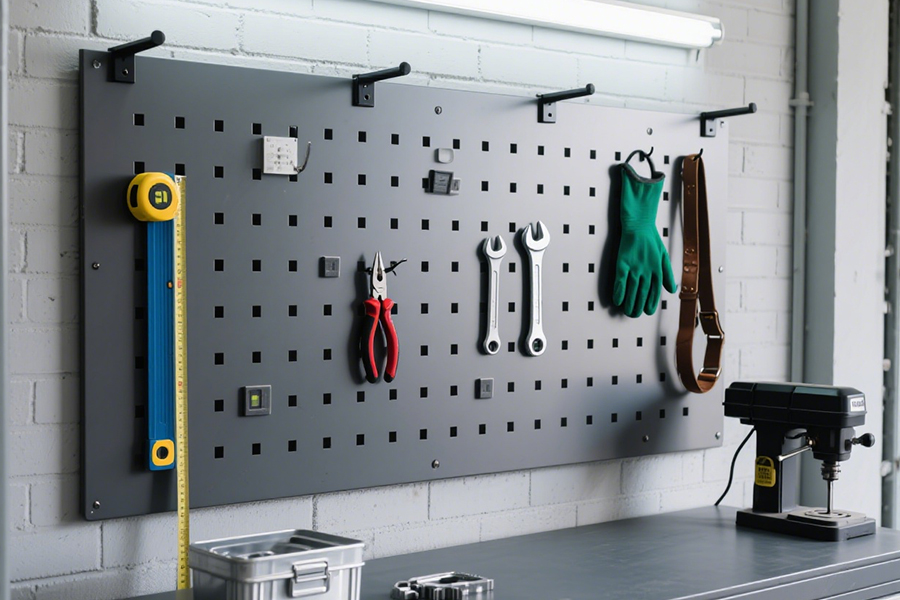
Transitioning to the manufacturing phase, CNC punching technology serves as the core process for fabricating perforated and pegboards; utilizing high-precision dies and programmed controls, it enables the rapid formation of various hole patterns. When integrated with laser cutting equipment, complex contours and irregular structures can be cut with high precision, ensuring superior edge finish and dimensional consistency. To address diverse product requirements, CNC bending systems employ multi-axis synchronized control to achieve forming results characterized by precise angles and high repeatability—a capability particularly well-suited for fabricating structural components such as cabinets, enclosures, and equipment housings.
Regarding structural assembly, the deployment of automated welding platforms has significantly enhanced both welding quality and efficiency. By utilizing preset parameters and trajectory controls, the welding process becomes more stable, thereby effectively guaranteeing the uniformity and structural integrity of the weld seams. Concurrently, a range of surface treatment lines—including powder coating, anodizing, and anti-corrosion treatments—can be selected based on the product's intended application environment; these processes not only enhance the product's aesthetic appeal and tactile quality but also bolster its durability and longevity.
Of particular note is that modern sheet metal processing systems are no longer confined to the capabilities of isolated machinery; rather, they leverage information management systems to facilitate collaborative, end-to-end process management. The implementation of ERP systems creates a unified platform for order management, production scheduling, inventory control, and quality traceability, ensuring the real-time sharing of data across all operational stages. By integrating Lean Manufacturing principles, enterprises can optimize production rhythms, minimize resource waste, and establish a manufacturing model that achieves both high efficiency and operational stability.
In terms of application, this technological framework is widely applicable across sectors such as architectural decoration, rail transit, power electronics, industrial equipment, and new energy. Different application scenarios impose distinct requirements on product performance; for instance, decorative products prioritize aesthetics and visual consistency, whereas industrial products place greater emphasis on structural strength and dimensional precision. Through modular design and flexible manufacturing capabilities, enterprises can rapidly switch between production schemes to effectively meet the demands of multi-category, small-batch, and customized orders.
Furthermore, a robust technical support infrastructure constitutes another vital component of modern sheet metal processing operations. From product design optimization and sample validation to mass production control, the technical team remains engaged throughout the entire product lifecycle, ensuring that performance expectations are met at every stage. Coupled with specialized foreign trade service capabilities, the company is able to provide customized solutions tailored to the specific demands of diverse regional markets, thereby enhancing the overall value of its services.
In summary, modern sheet metal processing has evolved from a traditional manufacturing model into a comprehensive technical system that integrates design, manufacturing, and service. Through continuous equipment upgrades and digital transformation, this system has not only significantly boosted production efficiency and product quality but also provided a solid foundation for the company to compete on a global scale. Looking ahead, as smart manufacturing technologies continue to advance, sheet metal processing is poised to demonstrate even greater growth potential across an expanding range of high-end application sectors.


Contact Us
Contact
You can contact us in four ways below. We'll respond promptly after receiving your inquiry!
Call Us
Send Email
Message Form
Add WeChat or WhatsApp
Upload Drawings

Your documents are secure and confidential.

Drawing

Order

Delivered